Pawbertons
Disposable Dog Diapers - XXS to XXL for Heat, Incontinence & Travel
Disposable Dog Diapers - XXS to XXL for Heat, Incontinence & Travel
Couldn't load pickup availability
Nobody plans to buy pet nappies. You buy them because a dog has come into season and the sofa is cream, because an elderly dog has started leaking in their sleep, because you're two hours into a car journey with a puppy who hasn't quite got it yet, or because you're taking a recovering pet somewhere that isn't your house.
These are disposable, sized properly from 1 kg to 25 kg, and they do the job for as long as you need them and not a day longer.
When People Use Them
- Seasons and heat cycles - the most common reason, and the one that saves the most furniture
- Incontinence in older dogs, particularly overnight and after long sleeps
- Post-operative recovery, when a dog can't get outside reliably
- Travel and long journeys, where there's no safe place to stop
- House training accidents, as a temporary safety net rather than a solution
- Cognitive decline in senior dogs, where the signal simply stops arriving in time
- Visiting and holiday lets, where an accident costs more than embarrassment
Size Chart
Pack quantity varies by size - smaller sizes come with more pieces, since smaller dogs need changing just as often.
| Size | Dog weight | Pieces per pack |
|---|---|---|
| XXS | 1–2 kg | 20 |
| XS | 2–3 kg | 18 |
| S | 3–5 kg | 16 |
| M | 5–8 kg | 14 |
| L | 7–10 kg | 12 |
| XL | 10–15 kg | 10 |
| XXL | 12–25 kg | 8 |
Weight is a starting point, not the whole answer. A stocky 8 kg terrier and a lean 8 kg whippet have very different waists, and it's the waist that decides whether a nappy stays on. If your dog is deep-chested, barrel-bodied, or between two sizes, go up - a nappy that's slightly loose can be adjusted, one that's tight will rub and leak at the legs.
Getting The Fit Right
- Thread the tail through the tail opening first. This is what stops the nappy rotating, and it's the step people skip.
- Bring it up snugly between the back legs, without pulling tight.
- Fasten the tabs so you can slide two fingers under the waist.
- Check the leg openings lie flat against the skin. Folded or bunched edges are where leaks start, every time.
Changing Them - Please Read This
Change them often, and change them immediately when soiled. This isn't a comfort note, it's the whole safety issue with pet nappies.
Urine left against skin causes scalding - red, raw, painful patches that take weeks to heal. It also creates exactly the warm, damp conditions that lead to urinary tract infections, and in a dog who's already incontinent that's the last thing you want.
As a rule: every three to four hours at most, and straight away if wet or soiled. Check the skin underneath at every change, and if you see redness, leave the nappy off and let the area breathe.
Don't leave a dog unsupervised in one for long stretches, and never overnight without a plan to check. Some dogs also chew nappies off - the absorbent gel inside isn't something you want swallowed, so if yours is a chewer, they need watching.
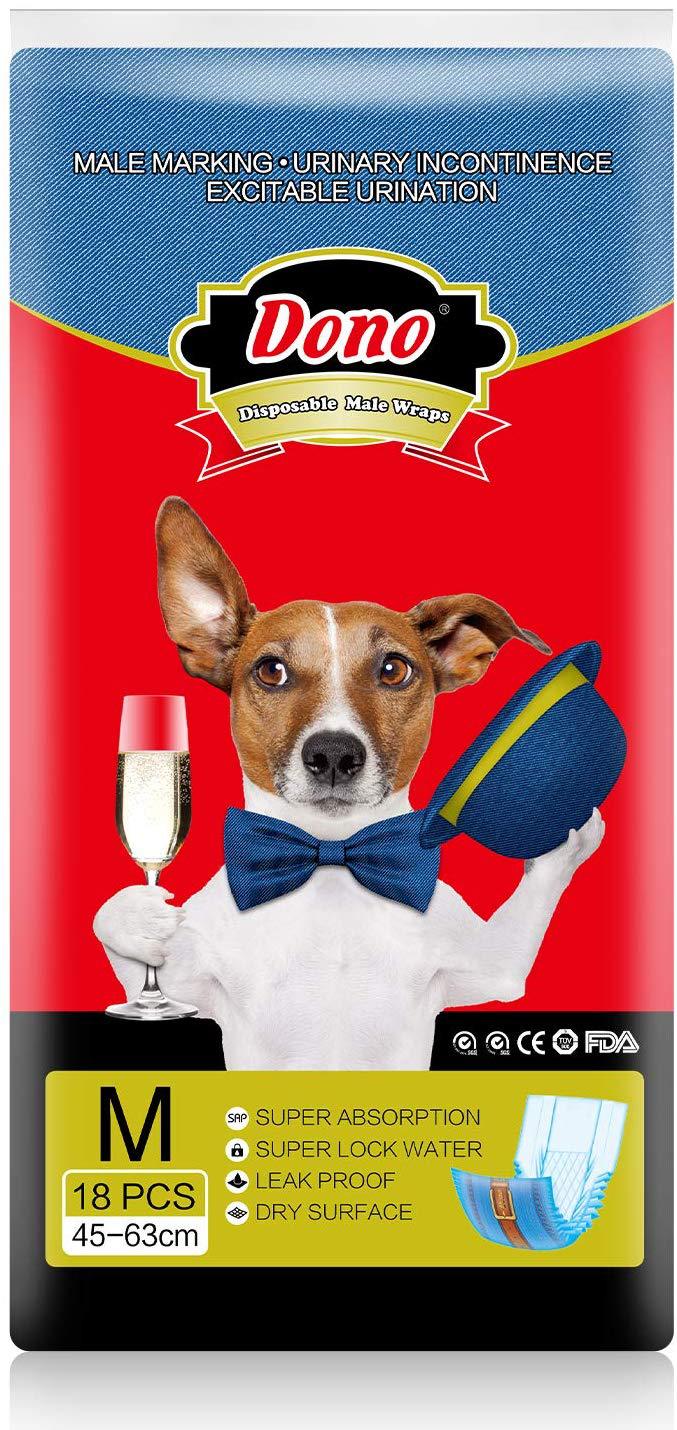
A Word On Male Dogs
Nappies with a tail opening are designed around female anatomy and around incontinent dogs of either sex. Male dogs urinate forward, and a standard nappy often doesn't cover the right area - which is why belly bands exist as a separate product for male marking and leaking.
If you have a male dog who dribbles or marks indoors, check that a nappy is the right product before ordering. For a male dog with genuine incontinence, these can work; for a male dog who marks, a belly band usually works better.
Specifications
| Product type | Disposable pet nappies |
| Material | Non-woven fabric with absorbent core |
| Sizes | XXS to XXL - 1 kg to 25 kg |
| Pack size | 8 to 20 pieces depending on size |
| Use | Single use, disposable |
Nappies Aren't The Answer To Everything
If a previously reliable dog starts leaking or having accidents, see a vet before you buy nappies. New incontinence in an adult dog is a symptom, not a habit - urinary infections, kidney disease, hormonal conditions, diabetes and spinal problems all present this way, and several of them are treatable.
Managing the mess without finding out why is how a treatable condition gets missed. Use nappies alongside a diagnosis, not instead of one.
Similarly, for a puppy still learning, nappies protect your floor but slow the training down - a puppy who never feels wet learns more slowly. Use them for journeys and nights out, not as the everyday approach.
Frequently Asked Questions
How many will I need?
For a season, most dogs are in nappies for roughly two to three weeks, changed several times a day - most owners get through more than one pack. For ongoing incontinence, work on four to six a day and buy accordingly.
Will my dog try to remove it?
Many do at first. Distract rather than scold - a walk, a chew, a game - and most dogs stop objecting within a day or two. A dog who won't stop chewing at it needs supervision, since the gel shouldn't be swallowed.
Can I use them on a cat?
Some cats tolerate them for incontinence or post-surgery, though many object strongly. Fit by weight and expect a period of adjustment. See our Cats collection for other recovery essentials.
Do they leak?
Mostly when the fit is wrong - a size too small, leg openings folded under, or the tail not threaded through. Check those three before assuming the product's at fault.
Are they flushable?
No. Bin them.
Can I use human baby nappies instead?
People do, with a hole cut for the tail, but the shape is wrong for a four-legged body and they slip more. These are cut for the job.
Find recovery gear, harnesses and everyday essentials in our Dogs collection.
Share